
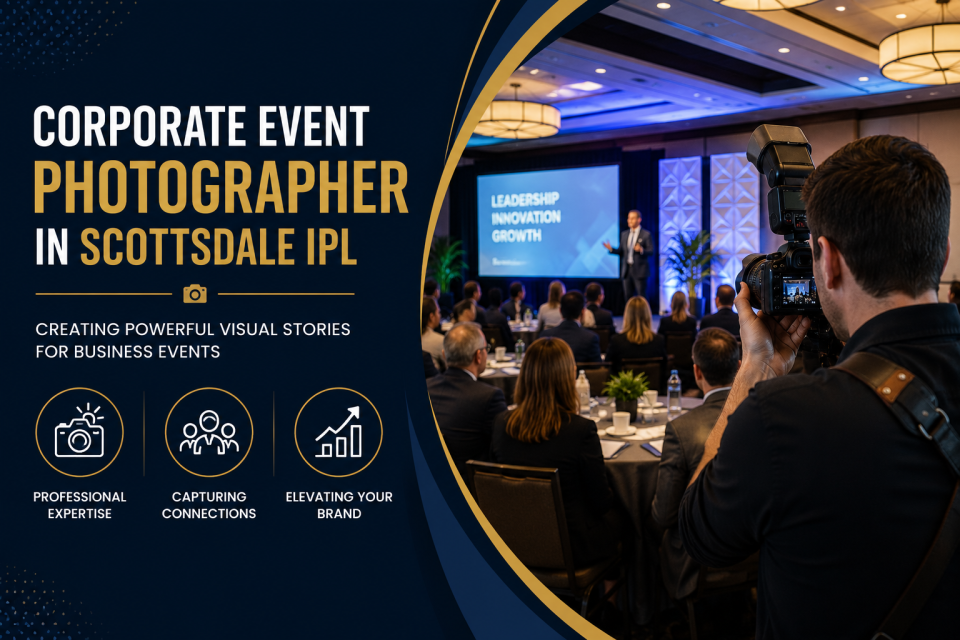
A successful corporate event is more than a gathering of employees, customers, executives, or industry professionals. It represents an investment in relationships, communication, brand reputation, and future opportunities. Whether a company is organizing a conference, leadership retreat, trade event, awards dinner, product launch, or networking reception, photography can preserve the experience while extending its value well beyond the event itself.
Hiring a corporate event photographer in Scottsdale allows businesses to document these occasions with an understanding of both professional environments and visual storytelling. Rather than simply taking pictures of people standing together, effective event photography captures presentations, genuine conversations, audience reactions, branded environments, important details, and the overall atmosphere of the gathering.
Scottsdale also provides an appealing visual setting. Luxury resorts, sophisticated event venues, contemporary architecture, mountain views, and distinctive desert landscapes give businesses opportunities to create photographs that feel professional while clearly establishing a sense of place.
Why Professional Event Photography Matters
Corporate events often require weeks or months of preparation. Teams spend significant time coordinating venues, speakers, schedules, catering, entertainment, audiovisual production, décor, and guest experiences.
Once the event begins, however, important moments happen quickly.
A keynote speaker may make an important announcement. An executive may meet a major customer. Employees may celebrate an achievement. Attendees might engage enthusiastically with a new product or branded experience.
Professional photography preserves these moments so they can continue supporting the organization after the event concludes.
A well-planned gallery can become a long-term visual resource rather than simply an archive.
Scottsdale Offers a Distinctive Event Environment
One reason Scottsdale is attractive for corporate gatherings is its combination of professional facilities and destination appeal.
The area offers resorts, conference spaces, restaurants, outdoor venues, golf settings, and sophisticated hospitality environments. An event might begin with an indoor leadership meeting and conclude with an outdoor reception framed by desert scenery.
That variety gives photographers opportunities to create visually diverse coverage.
Luxury Resorts
Scottsdale’s resort environment can provide polished ballrooms, meeting rooms, courtyards, patios, pools, and landscaped outdoor spaces within a single property.
Photographers can use these different settings to prevent a multi-day event gallery from looking repetitive.
Desert Landscapes
Cacti, mountain views, warm evening light, and desert vegetation can establish a recognizable Arizona identity.
For destination conferences and incentive programs, these environmental photographs help communicate that the location itself was part of the attendee experience.
Indoor and Outdoor Gatherings
Arizona events frequently combine indoor business programming with outdoor social experiences.
Professional photographers need to adapt quickly as lighting, backgrounds, and activity levels change throughout the day.
Creating a Complete Visual Narrative
Strong corporate photography tells a story from beginning to end.
Coverage may start before attendees enter the room. Wide photographs of the venue can establish scale, while close-up images document signage, name badges, printed programs, stage graphics, sponsor installations, and carefully arranged tables.
As attendees arrive, the focus shifts toward people and interactions.
Registration, introductions, conversations, keynote sessions, breakout meetings, product demonstrations, entertainment, awards, and celebrations all become chapters within the visual narrative.
Someone viewing the final gallery should be able to understand what happened even if they never attended.
Photographing Conferences With Purpose
Conferences present a wide range of photographic opportunities.
The obvious subjects are keynote speakers and panel discussions, but effective coverage goes considerably further.
Photographers may document:
- Attendee arrivals
- Registration areas
- Keynote presentations
- Panel discussions
- Audience reactions
- Breakout sessions
- Workshops
- Networking breaks
- Sponsor activations
- Evening receptions
Variety is particularly important during presentations.
Rather than producing dozens of nearly identical podium photographs, a photographer can alternate between wide room views, speaker close-ups, audience perspectives, presentation screens, and candid reactions.
This creates a gallery that communicates both the content and atmosphere of the conference.
Capturing Executive Meetings Discreetly
Executive gatherings require a different approach.
Leadership meetings, strategy sessions, and board-related events may involve smaller groups and more sensitive conversations. Photography should document collaboration without interfering with it.
A photographer needs to recognize when moving closer is appropriate and when remaining discreet is more important.
Images of leaders listening, presenting, exchanging ideas, and collaborating can later support internal communications, annual reports, leadership profiles, and company storytelling.
Clear communication before the event can also identify confidential situations, documents, or screens that should not be photographed.
Making Networking Look Natural
Networking is often one of the most valuable aspects of a business gathering.
It is also one of the easiest parts to photograph poorly.
Constantly asking groups to stop talking and look at the camera can interrupt conversations and create a gallery filled with similar posed images.
Candid photography provides a more authentic representation.
A photographer can capture introductions, handshakes, animated discussions, spontaneous laughter, and small groups exchanging ideas without unnecessarily interrupting them.
These photographs show genuine engagement and help communicate the relationship-building value of the event.
Documenting Keynote Speakers Effectively
Speaker photographs often become some of the most widely used images from corporate events.
They may later appear in newsletters, professional profiles, press materials, recap articles, websites, and social media.
Timing makes a significant difference.
A speaker looking down at notes rarely creates the strongest photograph. A confident gesture, natural smile, or moment of audience interaction usually communicates far more energy.
Photographers can also use stage graphics and presentation screens carefully to provide context and reinforce event branding.
Product Launches Need Strategic Coverage
Product launches are designed to generate excitement and attention, and photography should support those objectives.
Before guests arrive, clean images can document the product, displays, signage, and branded environment.
During the presentation, photographers can capture executives introducing the product, demonstrations, audience reactions, and the reveal itself.
Afterward, attendee interactions become particularly valuable.
Photographs of customers or industry professionals exploring a product demonstrate real interest and engagement. These images may later support advertising, sales presentations, public relations, social media, and internal reporting.
Capturing Brand Identity Naturally
Corporate events frequently include extensive branding.
Logos may appear on screens, registration counters, banners, sponsor displays, menus, merchandise, backdrops, and product installations.
These elements should be documented, particularly when sponsors or marketing teams require proof of visibility.
However, every photograph does not need to look like an advertisement.
Some of the strongest branded images incorporate logos naturally. An attendee conversation photographed with event signage in the background, for example, communicates both human interaction and brand identity.
Small Details Help Tell the Bigger Story
Event planners often spend significant time creating details that guests experience without consciously noticing.
Photography ensures those efforts are preserved.
Useful detail photographs may include:
- Table settings
- Floral arrangements
- Welcome gifts
- Name badges
- Menus
- Printed materials
- Stage décor
- Custom signage
- Lighting installations
- Branded merchandise
These images add variety to the gallery while recognizing the planning and design behind the gathering.
They can also be useful to venues, planners, sponsors, and production partners.
Photography for Marketing and Social Media
One of the greatest benefits of corporate event photography is the amount of original marketing content it can generate.
A single event may provide imagery for months of communication.
Businesses can use professional photographs across:
- Websites
- Social media
- Email campaigns
- Blog posts
- Press releases
- Sales presentations
- Recruitment materials
- Annual reports
- Internal communications
- Future event promotions
Photographers who understand these applications can intentionally create different compositions.
Horizontal photographs may suit websites and presentations, while vertical images can work effectively for mobile-first social content. Wider compositions can leave space for marketing copy, while close-up candid photographs are useful for storytelling posts.
Supporting Public Relations
Corporate gatherings frequently generate newsworthy moments.
Organizations may announce partnerships, introduce products, recognize executives, celebrate milestones, or host influential industry speakers.
Professional images give communications teams polished visual material to accompany these stories.
For public relations purposes, photographs should usually identify the main subject clearly while providing enough context for viewers to understand the setting.
Strong images of executives, announcements, partnerships, or branded experiences can significantly improve the presentation of corporate news.
Showing Company Culture Through Authentic Moments
Event photographs can also communicate something less tangible: organizational culture.
Images of employees collaborating, celebrating, learning, and interacting provide a genuine representation of what a company feels like from the inside.
These photographs can become valuable employer-branding assets.
Rather than relying on generic stock imagery, companies can show real employees participating in actual experiences.
For prospective employees, this type of authentic content may provide a more relatable impression of the workplace.
Balancing Candid and Posed Images
A complete event gallery should generally contain both candid and posed photographs.
Candid imagery captures genuine energy. It shows real conversations, reactions, participation, and emotion.
Posed photography serves a different but equally important function.
Leadership teams, award recipients, sponsors, speakers, and important guests may need clear photographs together.
The most effective coverage balances these approaches so the gallery feels authentic while still satisfying practical business requirements.
Managing Challenging Lighting Conditions
Corporate events often involve constantly changing lighting.
A photographer might begin outside in bright Arizona sunlight, move into a dim conference room, photograph a stage illuminated by LED screens, and finish at an evening reception with decorative lighting.
Each situation requires different technical decisions.
Professional photographers need to preserve natural-looking skin tones while maintaining the atmosphere of the environment.
This becomes particularly important during moments that cannot be repeated, such as awards, keynote announcements, or executive presentations.
Planning Photography Before the Event
Successful coverage begins before anyone picks up a camera.
Providing the photographer with a detailed event schedule helps identify important moments and determine where they need to be throughout the day.
Organizers should highlight:
- Key executives
- VIP guests
- Important speakers
- Award recipients
- Sponsors
- Product demonstrations
- Planned group photographs
- Special announcements
- Entertainment
- Priority branded installations
Marketing teams should also communicate whether certain photographs are needed quickly for social media, press releases, or same-day announcements.
Good preparation allows photographers to anticipate moments rather than react after they have happened.
Professionalism Behind the Camera Matters
Technical skill is only part of corporate photography.
A professional photographer also needs to understand business environments.
They should be comfortable working around executives, employees, customers, speakers, event planners, audiovisual crews, venue teams, and other vendors.
They need to know when to engage with attendees and when to remain almost invisible.
The objective is to capture everything important without becoming a distraction.
This combination of technical ability and situational awareness is especially important at executive meetings and high-profile business events.
Creating a Long-Term Image Library
Corporate photographs often become more valuable over time.
An image originally captured for a conference recap may later appear in an annual report. A networking photograph might become recruitment content. Executive images may be used in presentations, while photographs from one year’s event can promote registration for the next.
Organizations therefore benefit from thinking about photography as a long-term content investment.
A diverse gallery gives marketing and communications teams more options whenever they need authentic company imagery.
Choosing Photography That Supports Business Goals
Working with a corporate event photographer in Scottsdale should ultimately be about more than receiving attractive photographs after an event. The strongest coverage begins with an understanding of why the gathering is taking place and how the resulting imagery may support the organization afterward.
A product launch has different visual priorities from an executive retreat. An awards ceremony requires different timing from a trade event, while a networking reception calls for a more candid approach than formal leadership portraits.
Photography becomes more useful when it reflects these differences.
Extending the Value of Your Event
Corporate events may last for several hours or several days, but the photographs can continue working for the business long afterward.
They can help organizations demonstrate industry involvement, celebrate employees, communicate company culture, attract future attendees, support media outreach, and provide evidence of successful partnerships.
Professional images also help businesses avoid relying exclusively on generic stock photography.
Real people participating in real company experiences usually create a stronger sense of credibility and connection.
Make Every Important Business Moment Count
Scottsdale offers a distinctive environment for corporate gatherings, combining sophisticated venues, luxury hospitality, contemporary spaces, and memorable desert scenery. Professional photography can bring those elements together while keeping the people and purpose of the event at the center of the story.
The most valuable corporate photography does more than document attendance. It captures ideas being shared, relationships being formed, employees being recognized, products being introduced, and audiences engaging with a brand.
Thoughtful preparation, technical expertise, candid storytelling, and an understanding of business communication all contribute to a stronger final gallery.
When approached strategically, event photography transforms a temporary gathering into a lasting visual resource. The event itself may end when the final guest leaves, but the photographs can continue strengthening marketing, public relations, recruitment, internal communications, and future promotions for years to come.
