
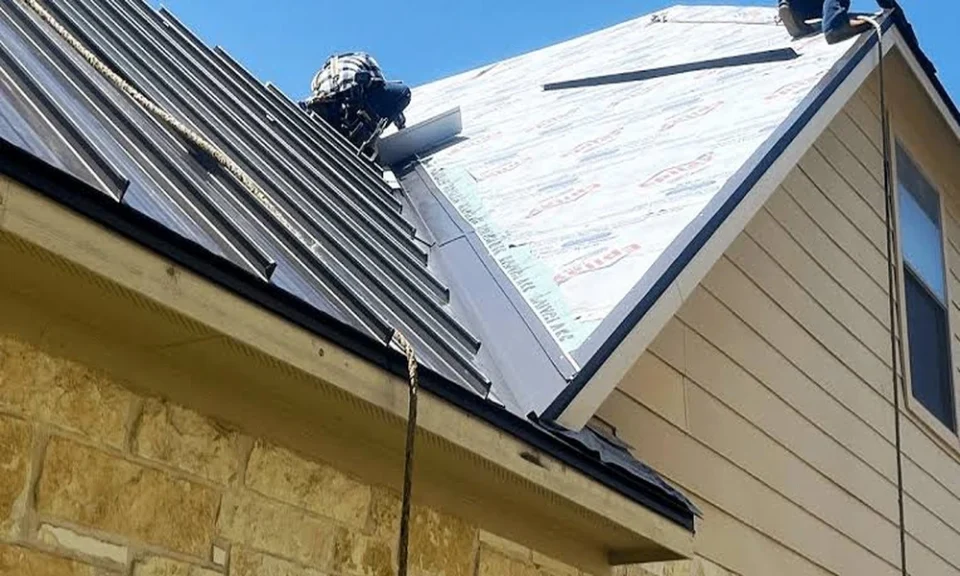
After a canyon wind event along the Wasatch Front, missing shingles usually aren’t what homeowners notice first. More often someone hears metal banging against the fascia at 2 a.m., or walks outside to find a long strip of trim hanging off the rake like a loose ribbon. Shingles get most of the attention in roofing conversations. The metal that frames them, bends around them and slips under them is what decides where water actually goes once it lands on the house.
Homeowners in Davis County and up toward Ogden who have talked shop with Redline Roofing tend to hear this point early. The North Salt Lake crew forms architectural sheetmetal as its own specialty rather than tacking trim on at the end of a shingle job. Their estimators also pair an aerial map with tape measurements taken on the roof itself. That habit of measuring twice matters most at the edges and seams this piece walks through.
A useful way to think about roof metal is as a set of traffic controllers. Anywhere water has to turn a corner, leave the roof or slip past a wall, a piece of metal should be standing there directing it. When one of those controllers is missing, bent or rusted through, water finds its own route, and it rarely picks one you’d like.
Following One Raindrop Down the Roof
Picture a single drop landing near the ridge. On the way down, the first metal it meets is often around a plumbing vent or exhaust pipe. Those boots and collars have rubber gaskets that crack after years of high-altitude sun, and a split gasket lets water run straight down the outside of the pipe into the attic.
If the drop lands near where two roof planes meet, it flows into a valley. Open valleys lined with metal handle heavy runoff well, and code calls for that lining to be at least 24 inches wide so water can’t spill over the sides during a downpour or a fast snowmelt.
Next comes any wall the roof butts against, such as a second story, a dormer or a chimney. This is where step flashing earns its keep. Each small L-shaped piece is woven between shingle courses, and counterflashing laps over it from the wall side. At the bottom of that wall there should be a kickout flashing that turns water away from the siding and into the gutter. A missing kickout is one of the most common causes of rotted sheathing hidden behind otherwise healthy siding.
Finally the drop reaches the edge. Drip edge at the eaves pushes water off the deck and into the gutter instead of letting it curl back and soak the fascia. Along the rakes, the same metal protects the exposed edge of the decking from wind-driven rain.
What Northern Utah Throws at Roof Metal
Metal on a roof in the Salt Lake or Davis County area faces a combination of stresses you don’t find in many other places.
The east canyon winds are the most dramatic. Downslope gusts off the Wasatch have topped 90 mph in parts of Davis County, and they hit roof edges from the opposite direction of normal storms. A drip edge or rake trim fastened too far apart gets peeled back first, and once the edge lifts, wind can work under the starter course and strip whole sections of shingles.
Winter does slower damage. Snow sits on the roof, melts during sunny afternoons, then refreezes at the colder eaves overnight. That cycle builds ice dams, and water backs up under the shingles right at the edge metal. If the ice barrier membrane and drip edge weren’t layered in the right order, the meltwater runs behind the gutter rather than into it.
Then there’s sun and temperature swing. Thin metal expands on hot July afternoons and contracts on cold nights. Over many years, that movement loosens nails, opens sealant joints and widens the gaps at overlaps.
Metals Don’t All Age the Same Way
Most homes along the Wasatch Front have galvanized steel or aluminum flashing. Painted steel is common on newer builds and on homes where the trim color matches the gutters. Copper shows up on high-end projects and holds up for decades, though it costs more.
Thickness is easy to overlook. Thin, lightweight drip edge from a big box store dents when a ladder leans on it and flutters in wind. Heavier gauge metal stays flat and keeps its seal.
Mixing metals also causes trouble. Copper touching aluminum or galvanized steel sets up galvanic corrosion, especially where water runs from one onto the other. A copper chimney cap draining onto galvanized flashing can eat through the lower piece far faster than either would wear out alone.
A Ten Minute Check From the Driveway
You can learn a lot without climbing a ladder. A pair of binoculars and a slow lap around the house are enough to spot early warning signs.
- Rake and eave edges. Look for trim that waves, bows outward or shows gaps where two pieces should overlap.
- Rust streaks. Orange stains running down fascia or siding usually point to corroding fasteners or flashing directly above.
- Wall junctions. Check the lower end of every roof-to-wall meeting for a kickout, and look for peeling paint or swollen siding beneath it.
- Chimney. Look for sealant that has pulled away from the brick or counterflashing that has slipped out of its mortar joint.
- Inside the attic. Water stains on rafters near the eaves or around vent pipes often trace back to metal, not shingles.
Any one of these is worth a closer look before winter sets in.
Reusing Old Flashing During a Reroof Is a Gamble
When a roof gets replaced, there is real temptation to save money by leaving the old step flashing, valley metal or drip edge in place. Sometimes the metal truly is in good shape. Often, though, it has been nailed through several times, bent during the old tear off, or sized to an earlier shingle profile that no longer fits.
Building code sets a clear baseline for edges. Drip edge must extend at least 2 inches back onto the deck and a quarter inch below the sheathing, with adjacent pieces lapped by 2 inches and fasteners no more than 12 inches apart. Underlayment goes over the drip edge at the eaves and under it at the rakes. The National Roofing Contractors Association’s Professional Roofing magazine has a solid technical breakdown of drip edge requirements for anyone who wants to read the details before talking with a contractor.
New shingles laid over tired metal look great on day one. The trouble shows up two winters later, in a stained ceiling corner that nobody connects to a bent strip of flashing hidden behind the gutter.
A roof is really a system of overlapping layers, and the metal pieces sit at every joint where that system is most likely to fail. Paying attention to them, especially in a climate that combines hard winds, heavy snow and strong sun, usually costs less than any repair they help you avoid.
