
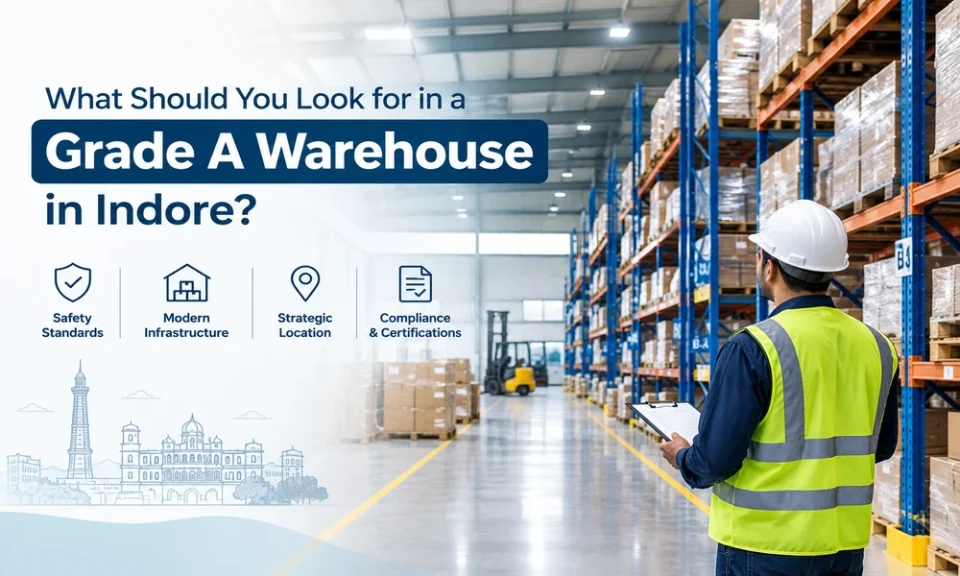
Choosing the right warehouse is an important decision for any business that manages inventory, distribution, or manufacturing operations.
A well-planned facility can improve daily operations, reduce logistics challenges, and support long-term business growth.
If you are searching for a Grade A warehouse in Indore, you need to look beyond available space and rental costs.
Factors such as location, infrastructure, safety, connectivity, and future expansion can make a significant difference to your business.
So, what exactly should you consider before selecting a warehouse? Let’s explore the key factors that can help you make an informed decision.
Why Is Indore Becoming a Preferred Warehousing Destination?
Indore has emerged as an important commercial and industrial centre in Madhya Pradesh. Its strategic location, expanding industrial ecosystem, and connectivity to major transportation routes make it an attractive destination for businesses.
The growing demand for warehousing in Indore is closely connected to industrial activity, e-commerce expansion, and the need for organised supply chain operations.
Industrial areas such as Pithampur further strengthen the region’s logistics potential. Businesses operating in manufacturing, automotive, consumer goods, and distribution can benefit from warehouse locations that provide convenient access to suppliers and customers.
However, not every warehouse offers the same infrastructure or operational advantages. Understanding what makes a facility suitable for your requirements is essential.
1. Strategic Location and Transportation Connectivity
Location should be one of your first considerations when evaluating a warehouse. Even a modern facility may create operational difficulties if it is poorly connected to important transportation routes.
Access to Highways and Industrial Areas
A well-located warehouse in Pithampur or the surrounding Indore region can help businesses improve the movement of raw materials and finished products.
Look for facilities that offer convenient access to major highways, industrial clusters, and distribution networks.
Good road connectivity can reduce unnecessary transportation delays and support more predictable delivery schedules.
Availability of Multimodal Connectivity
Businesses should also evaluate access to different transportation options.
A location near a multimodal logistics park in Indore may offer opportunities to coordinate road and rail transportation, depending on the infrastructure and services available.
This becomes particularly valuable for companies managing large shipment volumes or serving multiple regional markets.
2. Modern Infrastructure and Building Quality
The quality of warehouse infrastructure directly influences storage efficiency, employee safety, and daily productivity.
A Grade A warehousing facility is generally designed to support organised storage, modern material handling, and efficient goods movement.
What Infrastructure Features Should You Check?
Before finalising a warehouse, evaluate these important features:
- Clear height: Adequate vertical space for efficient racking and storage.
- Floor load capacity: Flooring suitable for the weight of stored goods and equipment.
- Loading docks: Properly designed areas for smooth vehicle loading and unloading.
- Ventilation and lighting: Infrastructure that supports comfortable and efficient operations.
- Truck movement: Sufficient space for vehicle entry, parking, and manoeuvring.
These features can improve space utilisation and help businesses manage warehouse activities with fewer operational interruptions.
3. Safety, Security, and Compliance Standards
Safety should never be overlooked when selecting a warehouse. A facility must protect employees, inventory, equipment, and business operations.
Modern industrial warehousing solutions should incorporate appropriate fire safety systems, emergency access, security arrangements, and operational safeguards.
Why Do Compliance Standards Matter?
A warehouse that meets applicable building, fire, and operational regulations can help businesses reduce risks and avoid unexpected disruptions.
Before signing an agreement, ask about fire safety approvals, emergency response arrangements, surveillance systems, and maintenance responsibilities.
It is also important to verify whether the facility meets the specific regulatory requirements of your industry.
4. Storage Efficiency and Operational Flexibility
Every business has different storage requirements. A manufacturing company may need space for heavy materials, while an e-commerce business may prioritise fast inventory movement and order fulfilment.
Therefore, choosing a warehouse based only on its total area may not deliver the best results.
Can the Warehouse Support Your Daily Operations?
Evaluate how easily the available space can accommodate racking systems, forklifts, inventory movement, and loading activities.
Well-designed warehouse infrastructure in Indore can support smoother workflows by reducing unnecessary movement between storage and dispatch areas.
Flexibility is equally important. A warehouse that allows operational adjustments can help businesses respond to seasonal demand, changing inventory levels, and evolving distribution requirements.
5. Technology and Warehouse Management Capabilities
Technology plays an increasingly important role in modern warehousing operations.
Businesses should assess whether a facility can support warehouse management systems, barcode scanning, inventory tracking, and other digital tools.
How Does Technology Improve Efficiency?
Digital inventory systems can improve stock visibility, reduce manual errors, and support faster order processing.
For businesses managing multiple products or distribution locations, these capabilities can make inventory planning more reliable.
However, the right technology depends on your operational needs. It is worth checking whether the warehouse has the connectivity, power infrastructure, and flexibility required to integrate your preferred systems.
6. Scalability and Long-Term Business Growth
A warehouse should meet your current requirements without limiting future expansion.
As your business grows, you may need additional storage capacity, more loading docks, or greater transportation flexibility.
Choosing a facility with expansion possibilities can reduce the inconvenience and expense of relocating operations.
When comparing logistics and warehousing services in Indore, consider whether the location can accommodate future changes in inventory volumes and distribution activities.
A warehouse that supports long-term planning can provide greater operational stability.
7. Transparent Costs and Reliable Facility Management
Warehouse rental is only one component of the total operating cost.
Businesses should also consider maintenance charges, utilities, security expenses, transportation costs, and any additional service fees.
What Should You Ask Before Signing an Agreement?
Discuss the lease terms, maintenance responsibilities, escalation clauses, and available operational support.
It is also useful to understand how facility management handles repairs, common areas, and infrastructure maintenance.
For businesses evaluating organised warehousing developments such as those associated with Fourmativ, reviewing the facility specifications and operational arrangements can help determine whether the space aligns with their requirements.
Connecting with the facility management team can also provide useful insights into warehouse availability, infrastructure, and site suitability before making a final decision.
Conclusion
Choosing the right Grade A warehouse in Indore requires more than comparing locations and rental prices. Infrastructure quality, transportation connectivity, safety standards, operational flexibility, and expansion potential all influence long-term performance.
Indore and the surrounding Pithampur industrial region offer opportunities for businesses seeking organised warehousing and logistics infrastructure.
Before making your final decision, visit the facility, verify its specifications, and evaluate how well it supports your daily operations.
The right warehouse should not simply provide storage space. It should help your business operate efficiently, manage supply chain requirements, and prepare for future growth.
