
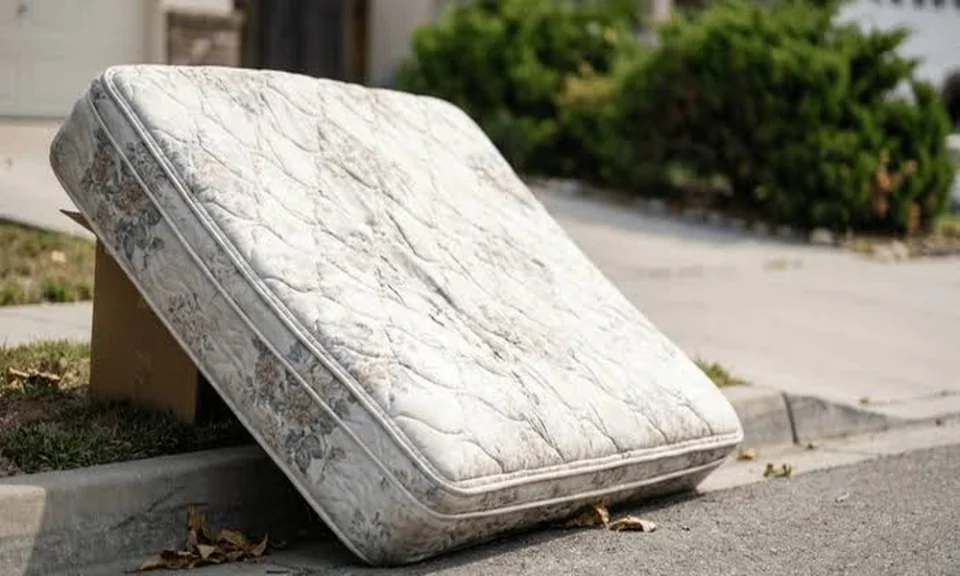
A single mattress tossed into a landfill may seem harmless, but multiply that by millions each year and the problem becomes impossible to ignore. The environmental consequences of mattress disposal demand urgent, inventive solutions.
The Environmental Toll of Mattress Disposal
How Mattresses Contribute to Landfill Overload
Vast quantities of used mattresses end up buried in landfills annually. North America alone sees millions discarded every year, with each mattress occupying up to 40 cubic feet of space. Unlike household waste that compacts over time, mattresses resist compression, quickly filling up landfill capacity and accelerating the search for new dumping grounds.
Decomposition Challenges and Toxic Components
Mattresses do not break down easily. Foam, metal springs, and synthetic fabrics can linger for decades. As these components decompose, they often release chemicals, such as flame retardants and volatile organic compounds, into surrounding soil and groundwater. This slow, leaching process translates into a lasting environmental hazard.
Traditional Mattress Disposal Methods
Landfilling: Scope and Consequences
For years, landfilling has been the default method for mattress disposal. However, this quick fix brings long-term consequences, swelling landfill sizes, toxic runoff, and wasted resources that could otherwise be reused.
Incineration: Benefits and Drawbacks
Some regions have turned to incineration, burning mattresses to reduce volume and sometimes generate energy. While incineration decreases landfill pressure, it creates an entirely new challenge: the release of harmful emissions, including dioxins and heavy metals, into the air.
The Economic and Environmental Costs of Conventional Disposal
Landfilling and incineration both demand significant resources for transport, handling, and environmental management. Communities pay the price through landfill expansion, environmental remediation, and health impacts from pollution.
Innovative Recycling Technologies
Mechanical Recycling: Breaking Down the Mattress
Mechanical recycling is transforming the end-of-life journey for mattresses. Specialized facilities now dismantle each mattress into core materials, steel, foam, wood, and textiles. These can be reprocessed into new products, from carpet padding to scrap metal, dramatically reducing landfill volume.
Chemical Recycling: Extracting Raw Materials
Researchers and industry pioneers are experimenting with chemical recycling techniques. These processes dissolve foam and fabrics back to their base chemicals, which can then be purified and reused in manufacturing. Although currently less widespread, chemical recycling holds promise for tackling non-mechanically recyclable components.
Emerging Technologies: Biodegradable and Modular Mattresses
Forward-thinking manufacturers are reimagining what a mattress can be. New designs incorporate biodegradable materials, such as latex and hemp, speeding up decomposition or enabling composting. Modular mattresses are another innovation, allowing individual components to be swapped or recycled rather than disposing of the entire product.
Comparative Analysis of Mattress Recycling Programs
Case Study: Recyc-Matelas in Canada
Canada stands out with its progressive approach to mattress recycling. Recyc-Matelas Canada, operating in Quebec and Ontario, has already recycled over four million mattresses. Their process combines manual and mechanical dismantling, with a focus on maximizing material recovery and minimizing landfill contribution. This organization positions itself as the only sustainable alternative to landfilling in the region, setting a benchmark for North American mattress recycling.
European and Asian Mattress Recycling Models
Across Europe, extended producer responsibility laws have made mattress recycling mandatory in several countries. In the Netherlands, more than 80 percent of discarded mattresses are recycled, thanks to robust collection and processing infrastructure. Japan focuses on manufacturer-led take-back schemes, requiring producers to collect and recycle their own products.
| Region | Recycling Rate (%) | Mandatory Recycling? | Primary Method |
|—————–|——————-|———————|———————————|
| Canada (Quebec) | 50+ | Yes (some regions) | Mechanical/manual dismantling |
| Netherlands | 80+ | Yes | Centralized processing centers |
| Japan | 65 | Yes | Manufacturer take-back programs |
| USA | <20 | Mixed | Landfill/incineration |
Effectiveness, Scalability, and Environmental Impact
Programs with government backing and industry collaboration consistently outperform voluntary efforts. These models divert thousands of tons of waste from landfills each year, while encouraging product design changes that support a circular economy.
Design Innovations to Reduce Waste
Use of Sustainable and Recyclable Materials
The industry’s gradual shift toward organic fibers, natural latex, and recyclable metals is making it easier to reclaim mattress components. These materials not only break down faster but also fetch higher market value in recycling streams.
Designing for Disassembly and Reuse
Some manufacturers now build mattresses with disassembly in mind, using standardized fasteners and modular parts. This approach streamlines both repair and recycling, extending product life and reducing waste.
The Role of Manufacturers in Circular Mattress Economy
Producers investing in sustainable design and take-back programs help close the loop, ensuring resources circulate rather than end up in landfills. Their participation is critical for a truly sustainable mattress industry.
Consumer and Industry Roles in Mattress Waste Reduction
How Consumers Can Support Recycling Initiatives
Consumers play a pivotal role by choosing brands that prioritize recyclability, opting for take-back services, and avoiding illegal dumping. Awareness makes a measurable difference in driving industry change.
Retailer Take-Back Programs and Incentives
Retailers increasingly offer take-back services for old mattresses, sometimes incentivized by discounts on new purchases. These programs ensure proper disposal and feed recyclable materials back into production.
Policy and Regulation Driving Industry Change
Laws mandating recycling and holding producers responsible for disposal costs are key to broadening recycling’s reach. Regions with robust legislation consistently achieve higher recycling rates.
Challenges and Opportunities Ahead
Barriers to Widespread Mattress Recycling
Collection logistics, contamination, and inconsistent regulations presently hinder growth. Many regions lack the necessary infrastructure or incentives for recycling.
Potential for Technological Advancements
Automation, improved materials tracking, and new recycling chemistries could overcome existing obstacles, making recycling more cost-effective and scalable.
The Future of Mattress Sustainability and Zero Waste Goals
With continued innovation, policy support, and consumer participation, the mattress industry has the potential to achieve near-zero waste. Each step forward brings us closer to a future where mattresses no longer choke our landfills but cycle endlessly as valuable resources.
