
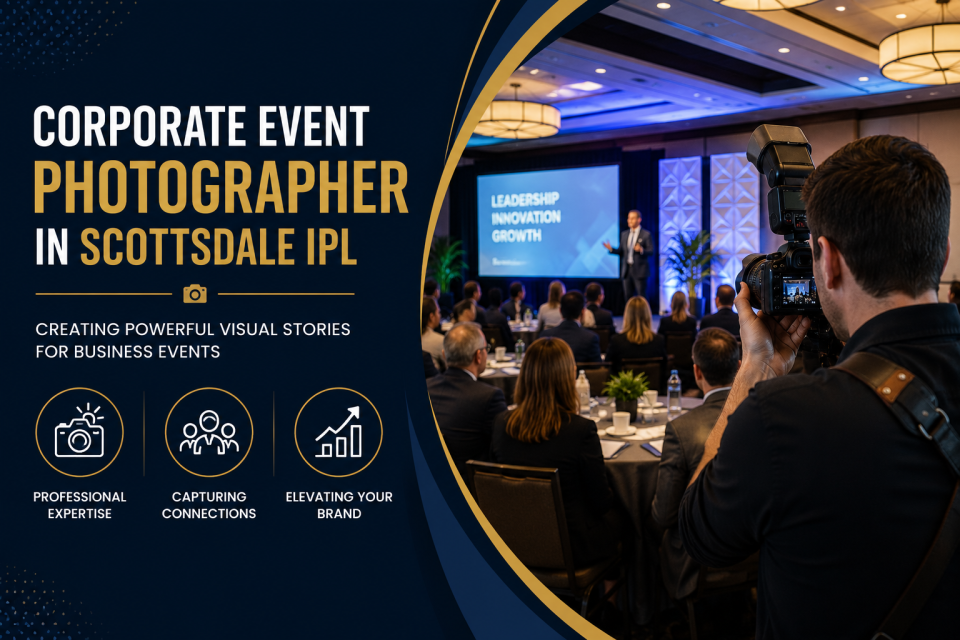
A successful corporate event represents much more than a date on the company calendar. It may be an opportunity to introduce a new product, educate an audience, recognize employees, connect with customers, strengthen partnerships, or position a company as an industry leader. Considerable planning goes into the venue, agenda, speakers, branding, catering, entertainment, and attendee experience. Professional photography ensures that this investment continues to create value after the event is over.
Hiring a corporate event photographer in Scottsdale gives organizations an opportunity to document their gatherings with a combination of professionalism, creativity, and strategic storytelling. Rather than simply recording who attended, thoughtful photography captures how people interacted, what the organization communicated, and how the overall experience reflected the brand.
Scottsdale is particularly well suited to visually memorable business gatherings. Its luxury resorts, sophisticated meeting spaces, contemporary architecture, desert scenery, and abundant natural light can all become part of an event’s visual identity.
Corporate Photography Is More Than Taking Pictures
Event photography can sometimes be viewed as a straightforward documentation service: photograph the speakers, take a few group pictures, and capture the room. Effective corporate coverage is much more intentional.
The photographer is essentially building a visual summary of the event in real time. That requires recognizing which moments matter and anticipating them before they disappear.
A comprehensive gallery might include establishing images of the venue, branded signage, attendee arrivals, keynote presentations, breakout sessions, sponsor displays, networking conversations, entertainment, awards, and candid reactions.
When these photographs are viewed together, they should communicate a clear story. Someone who did not attend should still be able to understand the scale, personality, and purpose of the gathering.
Why Scottsdale Creates a Distinctive Setting for Corporate Events
Scottsdale has developed a strong reputation as a destination for meetings, incentive programs, retreats, conferences, and executive gatherings. Part of its appeal comes from the variety of environments available within one destination.
Luxury Resorts and Meeting Spaces
Resort properties can provide everything from polished ballrooms and conference rooms to courtyards, terraces, pools, and landscaped outdoor spaces. Photographers can use these different settings to create greater visual variety throughout an event gallery.
Desert Scenery
Mountain views, desert vegetation, dramatic skies, and warm evening light can immediately establish a sense of place. For destination meetings, incorporating the surroundings can be especially valuable because the location is often part of the attendee experience.
Indoor and Outdoor Experiences
Corporate programs may move between meeting rooms, patios, restaurants, golf courses, reception spaces, and outdoor activities. Professional coverage can connect these different experiences into one cohesive story.
Documenting Conferences and Executive Meetings
Conferences are filled with moments that may seem routine while they are happening but become highly valuable afterward.
Speaker photographs, for example, can be used in newsletters, professional profiles, recap articles, social posts, and future conference promotions. Audience photographs demonstrate engagement and help communicate that presentations generated genuine interest.
The strongest conference coverage typically includes more than photographs of someone standing behind a podium. Wide images establish the scale of the room, medium compositions show the relationship between presenters and attendees, and tighter photographs capture expressions, gestures, and important details.
Executive meetings often require a more understated approach. The photographer should be able to capture collaboration and leadership without distracting participants or interfering with sensitive discussions.
Capturing Networking Without Making It Feel Staged
Networking is one of the primary reasons many people attend corporate gatherings, but photographing it effectively requires good timing.
Asking every group to stop talking and pose can quickly make an event gallery look repetitive. Candid coverage usually communicates the experience more naturally.
A handshake, an animated conversation, a spontaneous laugh, or a group exchanging ideas can demonstrate the value of the event far more effectively than a row of forced smiles.
Professional photographers learn to recognize these moments while remaining unobtrusive. They also pay attention to backgrounds, lighting, body language, and distracting elements so that spontaneous images still look polished.
Making Keynote Presentations Visually Interesting
Speaker photography presents an interesting challenge. A long presentation may take place from essentially the same location, yet the final photographs should not all look identical.
Variety can come from photographing different perspectives, expressions, gestures, presentation slides, audience reactions, and the overall stage environment.
Branded screens and event graphics can also add context when composed carefully. The objective is to create photographs that communicate both the speaker’s personality and the professional scale of the presentation.
Timing matters enormously. Capturing a confident gesture or genuine smile can make the difference between an ordinary photograph and an image that the speaker or organization wants to use repeatedly.
Product Launches Need Photography With Purpose
A product launch is often designed around a carefully controlled reveal. Photography should support that strategy.
Coverage may begin with product details and branded displays before moving into the presentation, audience reactions, demonstrations, and customer interactions.
Close-up photographs can showcase design and craftsmanship, while wider compositions demonstrate how the product was presented within the larger experience.
When people begin interacting with the product, the photography becomes even more valuable. Those images provide visual evidence of curiosity and engagement rather than showing the product in isolation.
Branding Should Appear Naturally
Corporate events frequently include extensive branding. Logos may appear on stage screens, signs, registration areas, step-and-repeat backgrounds, displays, menus, merchandise, and sponsor installations.
Capturing these elements is important, but branding should not overwhelm every photograph.
A more natural approach places brand elements within meaningful moments. For example, an engaging conversation photographed with a recognizable logo subtly visible in the background can simultaneously communicate human connection and brand identity.
This creates photographs that feel authentic while still providing marketing value.
Photographing the Details That Planners Worked Hard to Create
Large moments are important, but smaller details often reveal the personality of an event.
Professional coverage may include photographs of table settings, floral arrangements, printed materials, name badges, signage, lighting design, branded gifts, food presentation, stage décor, and custom installations.
These images acknowledge the work of planners and vendors while adding visual rhythm to the final gallery.
They can also become useful content for future event planning, sponsorship proposals, venue showcases, and internal presentations.
Creating Images for Marketing and Social Media
One of the biggest advantages of professional event photography is versatility.
A single corporate gathering can produce months of usable visual content. Images can support social media updates, blog posts, newsletters, advertising campaigns, sales presentations, recruitment materials, public relations, and future event promotions.
For that reason, photographers should think beyond individual pictures and create variety.
Vertical photographs may work well for mobile-first platforms and stories. Horizontal images may suit websites, presentations, and banners. Wider compositions can leave room for text or graphic design, while close-ups work well for social posts.
Strategic photography anticipates these future uses while the event is still happening.
Supporting Public Relations With Strong Visual Assets
When companies announce partnerships, milestones, awards, launches, or leadership initiatives, professional photographs can strengthen the story.
Publications and media teams often need clean, clearly composed imagery. A well-organized gallery gives communications professionals more flexibility when selecting photographs for press releases or editorial opportunities.
Images showing recognizable leaders, meaningful interactions, and contextual branding can be particularly useful because they immediately explain what happened.
Showing Company Culture Through Real Interactions
Corporate events can also reveal something less tangible: company culture.
Photographs of employees collaborating, celebrating achievements, welcoming guests, or enjoying a shared experience can communicate organizational personality more effectively than generic stock photography.
This content can support recruitment campaigns and employer branding by showing prospective employees what the organization actually looks and feels like.
Authenticity is particularly important here. Real employees participating naturally in a genuine company experience tend to create more relatable imagery than heavily staged workplace scenes.
Planning Photography Before Event Day
Great coverage begins before the first photograph is taken.
Providing the photographer with an event schedule helps identify important moments and avoid conflicts. Organizers should also communicate priorities such as VIP attendees, key sponsors, award recipients, special announcements, and must-have group photographs.
A useful photography brief may identify:
- Essential speakers and executives
- Important branded installations
- Sponsor requirements
- Scheduled group photographs
- Product demonstrations
- Awards and presentations
- Entertainment highlights
- Images required for immediate marketing
Preparation allows the photographer to spend more time anticipating moments and less time determining what is happening next.
Why Candid and Posed Photography Both Matter
Corporate photography should not be exclusively candid or exclusively posed. Each approach serves a different purpose.
Candid images communicate energy and authenticity. They show genuine conversations, reactions, and participation.
Posed photographs provide control and clarity. They are particularly valuable for leadership groups, award recipients, sponsors, speakers, and important guests.
The strongest event galleries usually combine both approaches. This creates a collection that feels lively while still delivering the formal photographs stakeholders expect.
Working With Challenging Event Lighting
Corporate venues can present complicated lighting conditions. A photographer may move from bright Arizona sunlight to a dim ballroom and then into a stage environment illuminated by LED screens and colored lights.
Each situation requires different technical decisions.
The goal is not simply to make the photograph bright enough. Skin tones should remain natural, important details should be visible, and the existing atmosphere should still feel authentic.
Experience with changing light is especially valuable when important moments cannot be repeated.
Professionalism Matters Behind the Camera
Technical photography skills are only part of successful corporate coverage.
The photographer also needs to understand professional environments. They should know when to move closer, when to remain discreet, how to interact respectfully with executives and guests, and how to work alongside planners, audiovisual teams, venue employees, and other vendors.
Corporate photography is most effective when attendees barely notice the process while organizers remain confident that everything important is being documented.
Extending the Life of an Event
An event may last one evening or several days, but its photographs can remain useful for years.
A thoughtful image library allows organizations to revisit successful moments whenever they need visual content. Photographs from one conference might later appear in an annual report, recruitment campaign, sales deck, sponsorship proposal, or announcement for the following year’s event.
This is why professional event coverage should be considered part of a broader communication strategy rather than simply an archival task.
Photography That Keeps Your Event Working After It Ends
Corporate events bring people together for a reason. They introduce ideas, strengthen relationships, celebrate achievements, build communities, and create experiences associated with a brand. Professional photography ensures those outcomes do not disappear when attendees leave the venue.
In Scottsdale, distinctive desert scenery and sophisticated venues provide an especially strong foundation for visual storytelling. Yet location alone does not create compelling photographs. The greatest value comes from understanding the event’s purpose, anticipating important moments, documenting authentic interactions, and creating imagery with future business uses in mind.
From keynote presentations and executive conversations to branded details and spontaneous attendee reactions, every photograph can become part of a larger narrative. When coverage is approached strategically, the final gallery does more than prove that an event happened. It communicates why the event mattered—and gives the organization professional visual assets that can continue telling that story long into the future.
