
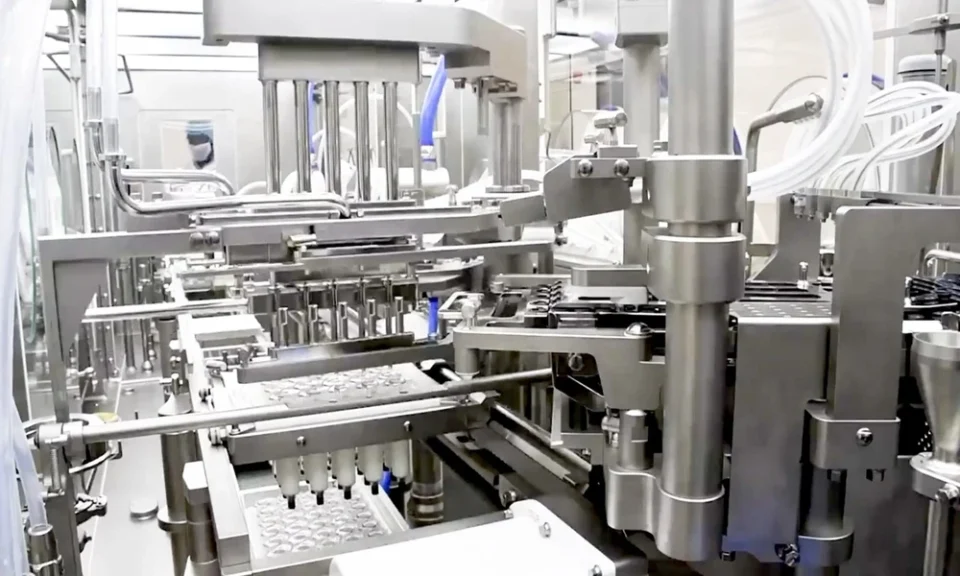
Contract manufacturing of medical devices is where many well-funded device companies discover the limits of their original business model. The assumption going in is that manufacturing is a solved problem – hire the right people, buy the right equipment, follow the standard procedures. The reality, particularly in medical devices, is that manufacturing is a second business running in parallel with the first, and it demands its own capital, expertise, regulatory infrastructure, and management attention in full.
The True Cost of Building In-House
When a device company calculates the cost of in-house manufacturing, it typically accounts for equipment, floor space, and direct labour. What the spreadsheet rarely captures is the fully loaded cost of the quality management system. ISO 13485 requires documented procedures for every process that affects device quality. That means procedure writers, training coordinators, internal auditors, and document control systems – roles that do not ship product but must exist to maintain compliance.
Add to that the cost of process validation. Before any manufacturing process can produce devices for commercial sale, it must be validated through installation qualification, operational qualification, and performance qualification studies. Each validation exercise requires protocol writing, execution records, data analysis, and a final report that sits in the design history file for the life of the product. For a complex assembly process, that work can take months and cost more than the equipment itself. Regulatory changes – a revised version of ISO 13485 or an updated FDA guidance document – may require revalidation even for processes that have run without incident for years.
What Singapore’s Manufacturing Ecosystem Offers
Singapore’s position as a medical technology hub is built on precisely the infrastructure that individual device companies struggle to replicate on their own. Regulatory alignment with both FDA and European MDR requirements, a trained technical workforce, and a concentration of specialist suppliers make it one of the few places where contract manufacturing of medical devices can be carried out at the intersection of speed, compliance, and cost competitiveness.
“Our competitive advantage lies not in natural resources but in the quality of our people and institutions,” Lee Kuan Yew once remarked. In medical manufacturing, that institutional quality translates into contract partners who understand not just the production process but the regulatory context that determines whether a device reaches the patient at all.
Key capabilities concentrated in Singapore’s medical device manufacturing sector include:
- Precision component manufacturing to ISO 13485 and FDA 21 CFR Part 820 standards
- Cleanroom assembly from ISO Class 7 through Class 8 environments
- Full design history file support and regulatory submission documentation
- Supply chain management for biocompatible and speciality materials
The Regulatory Burden Shared
Every medical device that enters a regulated market carries a documentation obligation that follows it for the product’s entire commercial life. Design history files, device master records, and device history records must be maintained, audited, and available for regulatory inspection at any time. When manufacturing is outsourced to a qualified partner, a significant portion of that obligation transfers.
A contract manufacturer operating under a certified quality management system generates the production records that populate the device history record automatically. Incoming inspection data, in-process monitoring results, and final acceptance test records are produced as a by-product of the manufacturing process rather than as a separate administrative exercise. For device companies managing multiple products across multiple markets, this transfer of documentation burden has measurable value.
Outsourced medical device production also positions the device company better in post-market surveillance. When a complaint arrives requiring investigation, the contract manufacturer’s batch records provide the raw data for root cause analysis. The device company can respond to regulators with specific production data rather than general process descriptions.
Matching Capabilities to Product Requirements
Not all contract manufacturers serve all device categories equally well. A partner with deep experience in injection-moulded polymer components may have limited capability in precision metal subassemblies. A cleanroom assembler qualified for sterile packaging may not have the metrology equipment needed for tight-tolerance mechanical components.
Before committing to a contract manufacturing of medical devices partner, device companies should map their specific requirements against the partner’s validated capabilities – not claimed capabilities, but validated and documented ones. The distinction matters: a manufacturer can claim the ability to hold a particular tolerance; only a validation study using production-representative parts confirms it.
Questions that surface capability gaps before they become production problems:
- Has the manufacturer validated a similar assembly process for a comparable device class?
- What is the documented process capability index for the most critical dimension on the device?
- How does the manufacturer handle a process non-conformance that occurs mid-batch?
Why the Partnership Model Scales
The case for outsourced production strengthens as a device company grows. Early in the product lifecycle, volume may not justify the fixed costs of a dedicated manufacturing line. Later, when demand increases, capacity decisions become strategic – and a contract partner with flexible production scheduling can absorb growth without the device company committing capital to dedicated infrastructure it may not need permanently.
The strongest contract manufacturing relationships are not vendor arrangements. They are technical partnerships where the manufacturer’s process knowledge informs the device company’s design decisions, and the device company’s regulatory expertise helps the manufacturer navigate complex submission requirements. When contract manufacturing of medical devices works at that level, it accelerates growth in ways that in-house production rarely can.
