
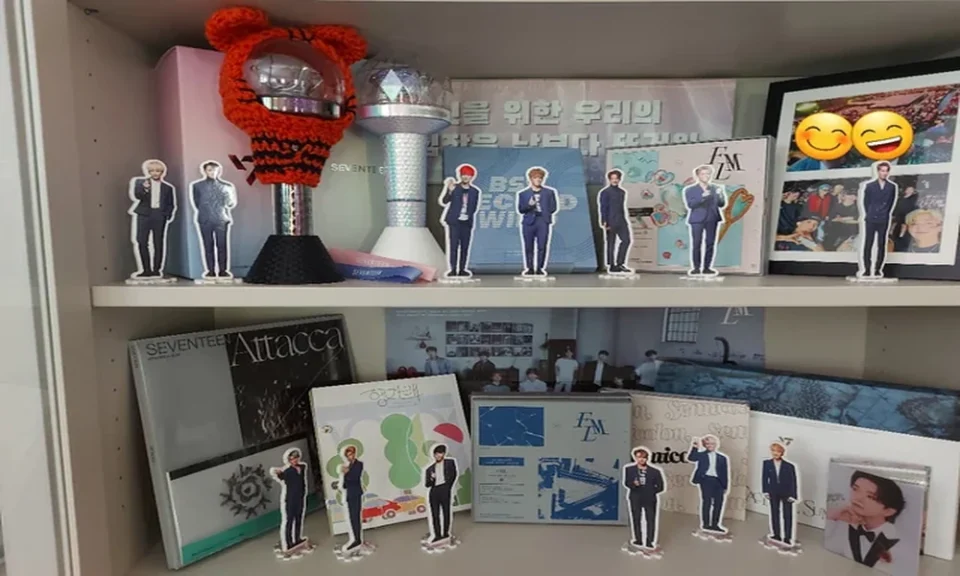
Most new CARATs make the same mistake: they buy everything at once, hit a budget wall in week three, and end up with three copies of the same album and zero light stick. Building a Seventeen merch collection that you’ll actually love in two years takes a little more intention than that. This guide breaks down every major merch category, tells you which items punch above their weight, and gives you a clear order of operations so you spend on the pieces that matter most first.
Why the SEVENTEEN Collecting Scene Is Unlike Any Other Fandom
SEVENTEEN’s collecting culture has a specific texture. The group built its identity around the idea that fans are the “CARAT” that gives the diamond its value, and that philosophy runs directly into how their merchandise is designed and released. Items come out in waves tied to albums, tours, and fan club membership cycles, which means there’s almost always something new on the horizon.
The broader market confirms how serious this all is. According to HTF Market Intelligence’s 2025 report, the global K-pop merchandise market is pegged at USD 4,980 million in 2025 and is expected to grow at 10.2% annually, potentially reaching USD 11,940 million by 2034. That growth is fueling more product variety, faster international shipping infrastructure, and more licensing options for groups like SEVENTEEN. For collectors, that’s genuinely good news.
SEVENTEEN’s reach also runs deep.
More than 30 million user-generated playlists on Spotify feature at least one track from the group , and the [RIGHT HERE] world tour brought live shows to South Korea, New York City, and beyond, according to the Spotify Newsroom. That global footprint is one reason why international fans have so many buying options today compared to even five years ago.
The Diamond-to-CARAT Collection Tier Framework
Here’s a framework I’d call the Diamond-to-CARAT Collection Tiers. Think of your collection as building from the core outward, exactly the way a diamond is cut layer by layer. Four tiers, four priorities.
Tier 1: Foundation. Official albums with inclusions. This is where every serious CARAT starts. Albums come with photocards, lyric booklets, postcards, and sometimes unit-specific art. The inclusion lottery is real, so buying two or three versions of the same album is common, but one copy of your preferred version is the floor.
Tier 2: Signature Fandom Items. The CARAT Bong light stick and official fan club membership. These two things make you part of the live experience in a way nothing else does. If you’re planning to attend a concert, the light stick is non-negotiable.
Tier 3: Tour and Event Goods. Concert merchandise released during specific world tours. Hoodies, tote bags, photo sets, and season’s greetings packages. These go out of print fast and almost always appreciate on the secondary market.
Tier 4: Deep Collection. Unit merchandise, solo member goods, collaboration items, and premium photo books. This tier rewards patience. Buying here before establishing Tiers 1 and 2 is how people end up with beautiful merch and no light stick.
Breaking Down the Merch Categories
| Category | What’s Included | Best For | Restock Likelihood |
|---|---|---|---|
| Albums | Photocards, booklets, postcards, CDs | All collectors | High (reprints common) |
| Light Sticks | CARAT Bong versions | Concert attendees | Medium (version upgrades) |
| Apparel | Tour hoodies, tees, hats | Wearable fans | Low (tour-specific) |
| Photo Sets | Member-specific photos, mini posters | Bias collectors | Low (event-tied) |
| Season’s Greetings | Calendar, photo book, photocard set | Display collectors | Never (annual release) |
| Fan Club Kits | Membership card, badge, exclusive goods | Fandom participation | Annual cycle |
What Photocards Are Really About
Photocards get their own section because they operate differently from every other merch category. They’re not just collectibles. Research published in the journal Athena: Journal of Social, Culture and Society and hosted on ResearchGate found that items like lightsticks and photocards serve as emotional and symbolic anchors for fans, signifying personal achievements and facilitating social relationships, and that K-pop merchandise plays a vital role in shaping fan identity well beyond its commercial value.
Consumer behavior researcher Dr. Russell Belk, whose work on material culture is widely cited in fandom studies, has argued that people attach meaning to objects that symbolize relationships, experiences, or aspirations. For CARAT photocard collectors, that translates directly: the S.Coups card you pulled from your first album purchase carries a memory, not just a face.
“Fans don’t collect things, they collect feelings. A photocard isn’t about the paper; it’s about the moment it represents.” Attribution in fandom research circles to Dr. Russell Belk’s framework on emotional attachment to possessions, widely applied to K-pop collecting behavior.
That’s why the secondary market for rare photocards is so robust. But for new CARATs, buying photocards you actually want, rather than chasing resale value, is almost always the better long-term play.
Your First 30 Days: A Practical Collecting Checklist
This is what I’d do if I were starting a Seventeen collection from scratch today. Run through this list in order and resist the urge to skip ahead.
- Pick one album era you love and buy one physical copy, preferably the version with the inclusions you find most appealing visually.
- Order your CARAT Bong light stick. Any version works; the newest available is usually the best bet for compatibility with future concert syncing.
- Decide on a bias or bias line. Trying to collect all 13 members equally from day one will drain your budget faster than anything else.
- Set a monthly budget. Even a modest figure keeps collecting fun rather than stressful. Most serious collectors treat this like a hobby subscription.
- Join one or two photocard trading communities before buying anything on the secondary market. Learning what things are actually worth before you spend is the move.
For international fans specifically, shipping costs and import fees eat into budgets fast if you’re ordering directly from South Korea. Using a dedicated international K-pop retailer makes a measurable difference. The Seventeen merch store on Kpop Exchange ships worldwide, which cuts out a layer of complexity for fans outside Asia who want official-quality goods without the forwarding agent headache.
The Long Game: Display, Protect, and Trade
A collection that lives in a box is a collection you’ll eventually stop caring about. The CARATs with the most satisfying collections tend to follow one simple rule: display what you love, protect what’s rare, and trade what you’re neutral on.
For albums, spine-out shelving keeps them visible without taking up too much space. Photocards belong in hard sleeves from day one, not in the paper envelopes they came in. Tour goods and apparel get rotated seasonally. Season’s greetings packages, because they’re never restocked, deserve the most protective storage you’ve got.
The collecting side of CARAT culture is genuinely one of the more welcoming communities in K-pop. Trading is built on goodwill as much as value, and finding the photocard you’ve been chasing through a fan-to-fan swap hits differently than any retail purchase. Start with intention, protect your budget, and let the collection grow at its own pace. The best collections always do.
